Governance & Global Voices
Meet the Team, Advisory Board, Partners & Global Voices
Our Team
International Advisory Board
Professor Ellen Hazelkorn
Joint managing partner at BH Associates education consultants, professor emeritus at Technological University Dublin, Ireland & Joint Editor, Policy Reviews in Higher Education.
Professor Atta-ur-Rahman
UNESCO Science Prize laureate and former coordinator general of COMSTECH (Organisation of Islamic Cooperation) and former federal minister of education in Pakistan.
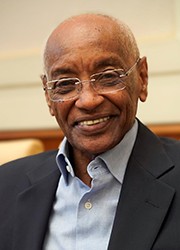
Professor Mohamed Hassan
President of the Sudanese National Academy of Sciences and the former head of the World Academy of Sciences (TWAS) in Italy.
Dr Savo Heleta
Researcher, internationalisation scholar, and analyst. Nelson Mandela University, South Africa.
Bouraoui Seyfallah
Professor of AI at the University of Science and Technology in Houari Boumediene, Algeria.
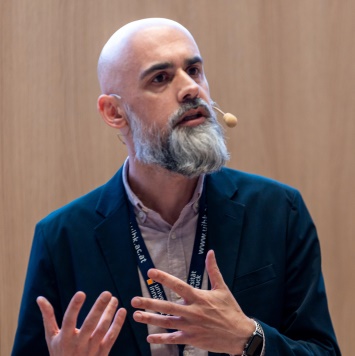
Professor Marwan Al-Raeei
Director of academic programmes at Distinction and Creativity Agency, Syria and Former Director of Ranking Office, Damascus University, Syria.
Dr Fernanda Leal
Secretary of International Relations at Federal University of Santa Catarina (UFSC), Brazil.
The Role and Functions of the GOAMUR Advisory Board
The Role. The Advisory Board of GOAMUR serves as our supreme independent strategic, methodological, and ethical guiding body. The board is designed to ensure that the Observatory’s global outputs remain scientifically rigorous, politically neutral, and highly impactful.
The Functions
1. Strategic and Policy Guidance
Advising the core operational taskforce on high-level institutional expansion and global scaling strategies. Assisting in shaping the Observatory’s long-term roadmap for engagements with key transnational bodies (such as UNESCO, OECD, and global research funding alliances).
2. Methodological Oversight and Algorithmic Review
Acting as a high-level peer-review chamber for the data auditing models, Python-based automation frameworks, empirical preprints and research papers developed by the Observatory. Providing critical expertise on emerging systemic risks in the global higher education landscape, such as the deployment of automated AI models by commercial ranking providers.
3. Ethical Guardianship and Advocacy
Ensuring the absolute impartiality, data transparency, and scientific objectivity of GOAMUR’s investigative audits and public retractions. Championing the core principles of the GOAMUR Manifesto — specifically data sovereignty and institutional diversity (bibliodiversity) — within global policy discourses.
4. Institutional and Geopolitical Connectivity
Helping bridge the gap between the Observatory’s technical findings and senior university leadership, ministries of education, and international regulatory authorities. Facilitating cross-regional dialogues to protect vulnerable academic ecosystems (particularly in the Global South and developing nations) from predatory metric architectures.
Operational Commitment
To respect our board members’ immense professional schedules, the Advisory Board operates as a lean, low-burden consultative body. Engagement will primarily consist of biannual virtual strategic briefings, asynchronous feedback on landmark policy papers/manifestos, and high-level consensus-building on crucial global statements.
Partner Network
Become a GOAMUR Partner
GOAMUR welcomes partnerships with universities, research institutes, policy organizations, and academic networks worldwide.
If your institution shares our commitment to academic integrity, transparent metrics, and fair representation in global rankings, we invite you to collaborate.
Contact Us About PartnershipVoices of Support



The Metric Watchdog
Our investigative publishing platform — delivering rapid-response alerts, deep analytical reports, and peer-reviewed research to the global academic community.
Latest Investigations
Ask the Experts
A secure, free interactive portal providing professional technical, methodological, and policy advice regarding scientific metrics and higher education development. Our network of international experts is ready to help.
Typical queries include assessment framework design, ranking methodology evaluation, metadata hygiene best practices, and transition strategies toward open metrics.
Observatories & World University Rankings
A comprehensive international directory of all major observatories of Science, Technology, Innovation, and Higher Education — establishing GOAMUR as the ultimate reference hub.
The Integrity Hotline
A secure, confidential reporting mechanism allowing academics worldwide to submit evidence of ranking failures, metadata fraud, or metric manipulations directly to the Observatory for auditing.
- End-to-end encrypted submissions
- Anonymous reporting supported
- Verified by our editorial audit team
- Findings published in Academic Bulletins
All submissions are reviewed by our audit team. Your identity is protected.
Webinars & Courses
International training webinars and professional courses on metric hygiene, ranking methodology, and the transition to open metrics.
Coming Soon
This section is being prepared. Our webinar and course catalogue will be published here shortly.